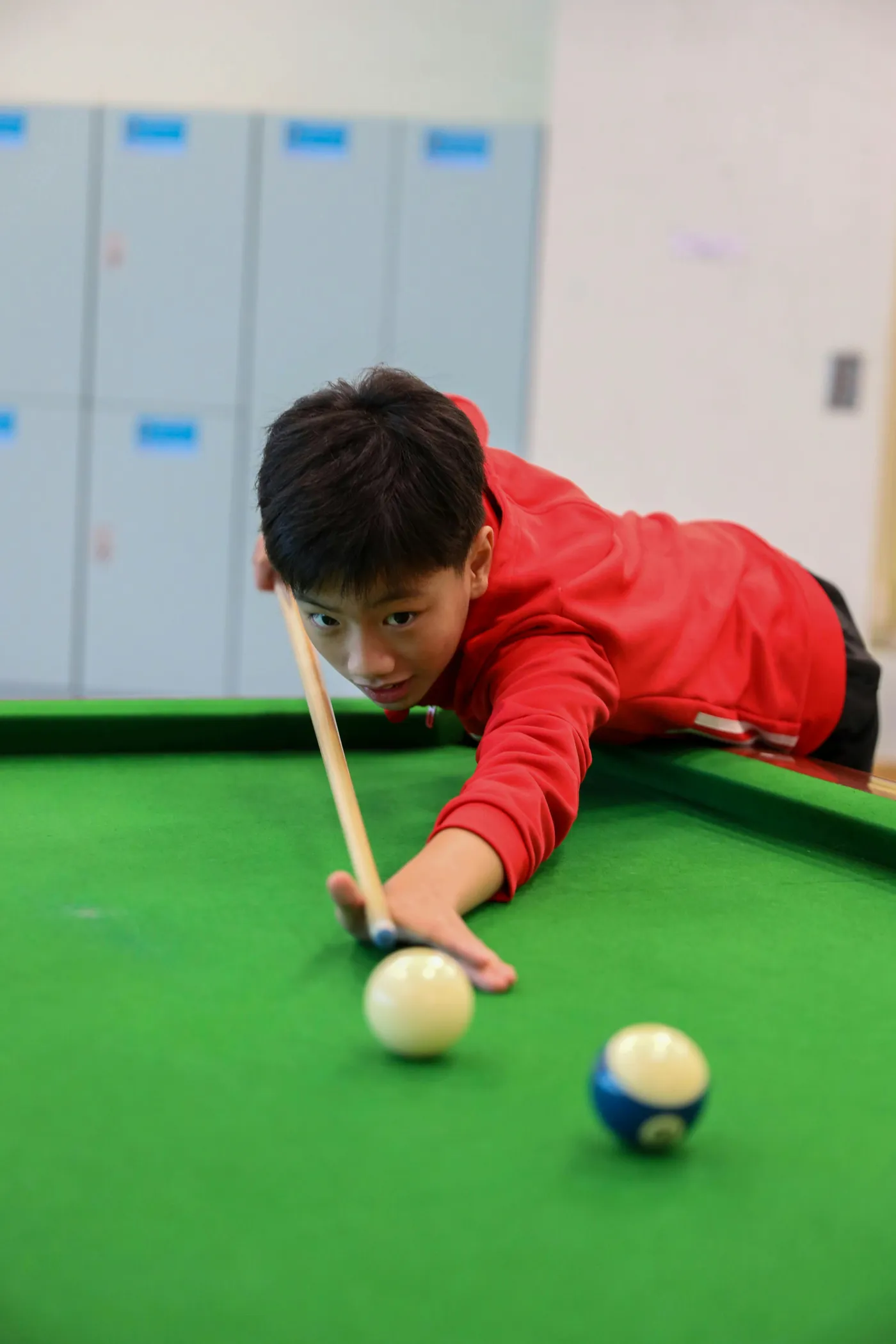

Snooker & Pool
Concentration, geometry, strategy — and a genuine pathway to the professional tour
Cue sports develop concentration, geometry, strategic thinking, and sportsmanship — skills that transfer directly to academic success and life beyond the table. With over 1,200 clubs across the UK and a structured competitive pathway from Under-14 to the professional tour, snooker offers genuine opportunities for talented young players.
The Four Main Cue Sports
The UK is home to four distinct cue sports, each with its own table, rules, and character. All share the same core skills — cue control, positional play, and tactical thinking — but they offer very different experiences.
🟢 Snooker
Played on a large 12ft table with 15 red balls, 6 colours, and a white cue ball. Players alternate between potting reds (1 point each) and colours (2-7 points), building breaks by keeping the cue ball in position for the next shot. A full frame can take 20-30 minutes and a match can last hours.
What makes it different: The largest table, the most balls, and the most tactical depth. Snooker rewards patience, precision, and long-term planning. It's the sport you see at the Crucible — and the one with the clearest junior competitive pathway in the UK.
🔴 Pool
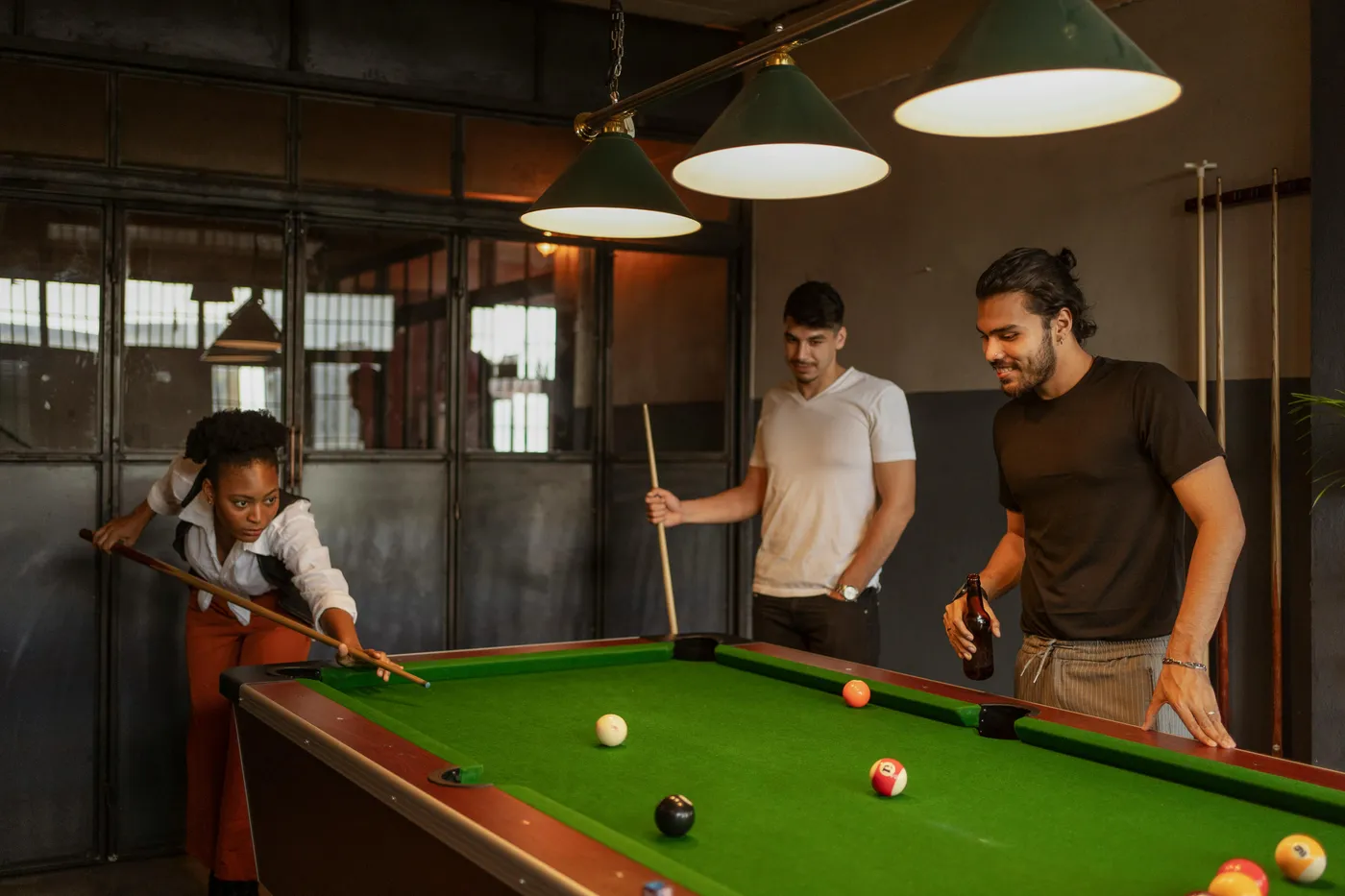
Played on a smaller table (typically 7ft in the UK) with 15 numbered or coloured balls and a white cue ball. In English 8-ball pool — the most common UK format — each player is assigned either spots (reds) or stripes (yellows) and must pot all of theirs before sinking the black. Games are fast, often lasting just 5-10 minutes.
What makes it different: Faster, more accessible, and found in almost every pub and youth club. The smaller table means less walking and quicker games — ideal for younger players and casual play. American 9-ball and 10-ball are also popular in competitive circles.
⚪ Billiards
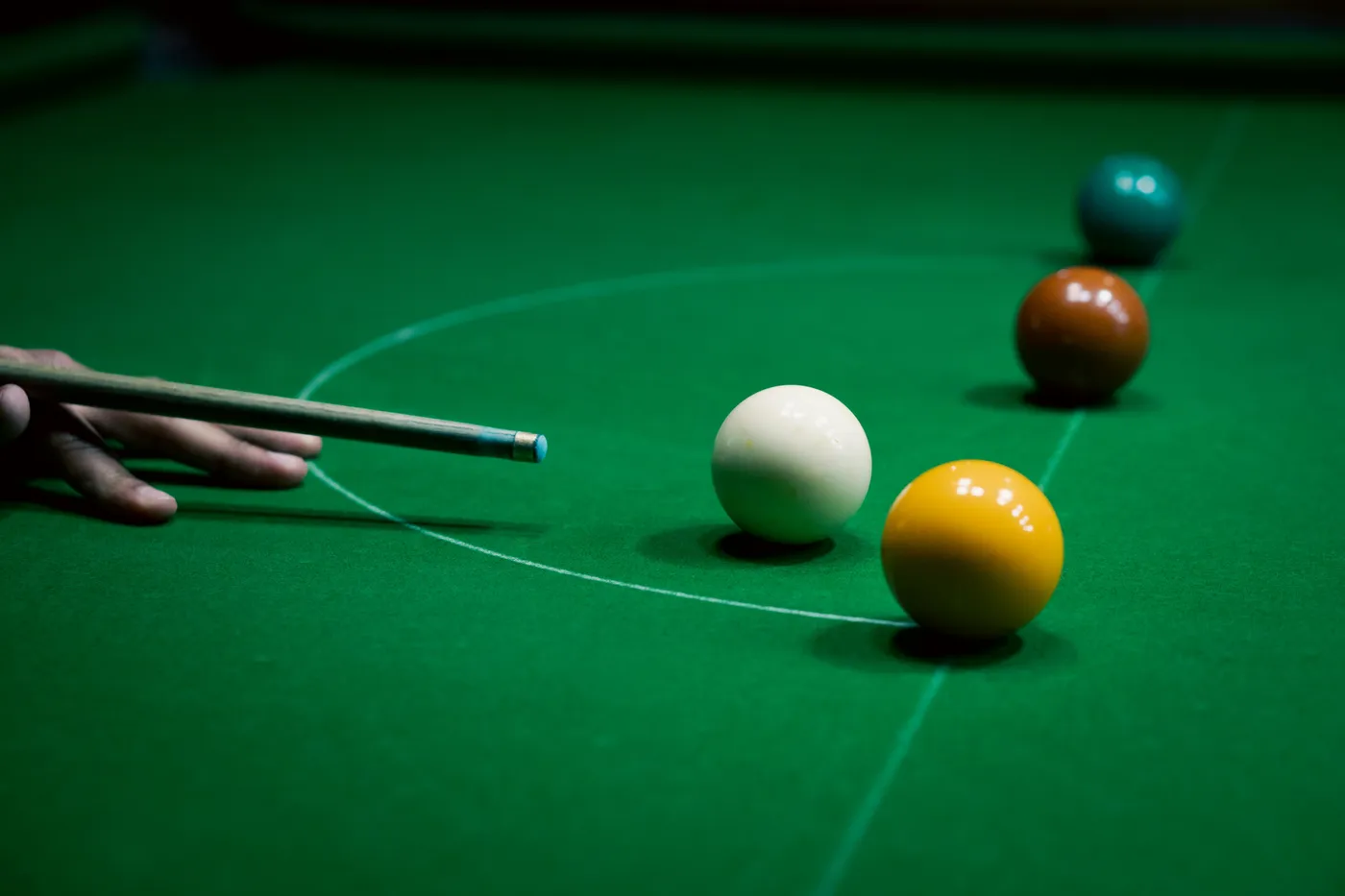
The original cue sport, played on a full-size snooker table but with just three balls — a red, a white, and a yellow (or spot white). Players score by potting balls, making cannons (hitting both object balls with the cue ball), or going in-off (potting the cue ball off another ball). It's a continuous scoring game with no set end point.
What makes it different: The purest test of cue ball control. With only three balls on the table, there's nowhere to hide — every shot demands precise position play. Billiards is less common than snooker or pool but is still played competitively and shares the same governing bodies.
🍄 Bar Billiards
A uniquely British pub game played on a special table with no pockets on the player's end. Instead, balls are potted into holes in the table surface, each worth different points. Mushroom-shaped pegs stand on the table — knock one over and you lose your score for that turn. The game is timed, typically 15-20 minutes, and the highest score wins.
What makes it different: The only cue sport where you play from one end only and pot into the table rather than into pockets. The pegs add a unique risk element — a careless shot can wipe out a big break. Bar billiards has a devoted following in southern England with active pub leagues, and it's a brilliant introduction to cue sports for younger players because the table is smaller and the rules are simple.
Getting Started
The first step is finding a club. The WPBSA (World Professional Billiards and Snooker Association) runs an official club finder with two tiers:
- 147 Clubs — Part of the official WPBSA Club Affiliation scheme, recognised for meeting minimum standards for providing a safe environment
- Places to Play — Additional clubs listed for convenience
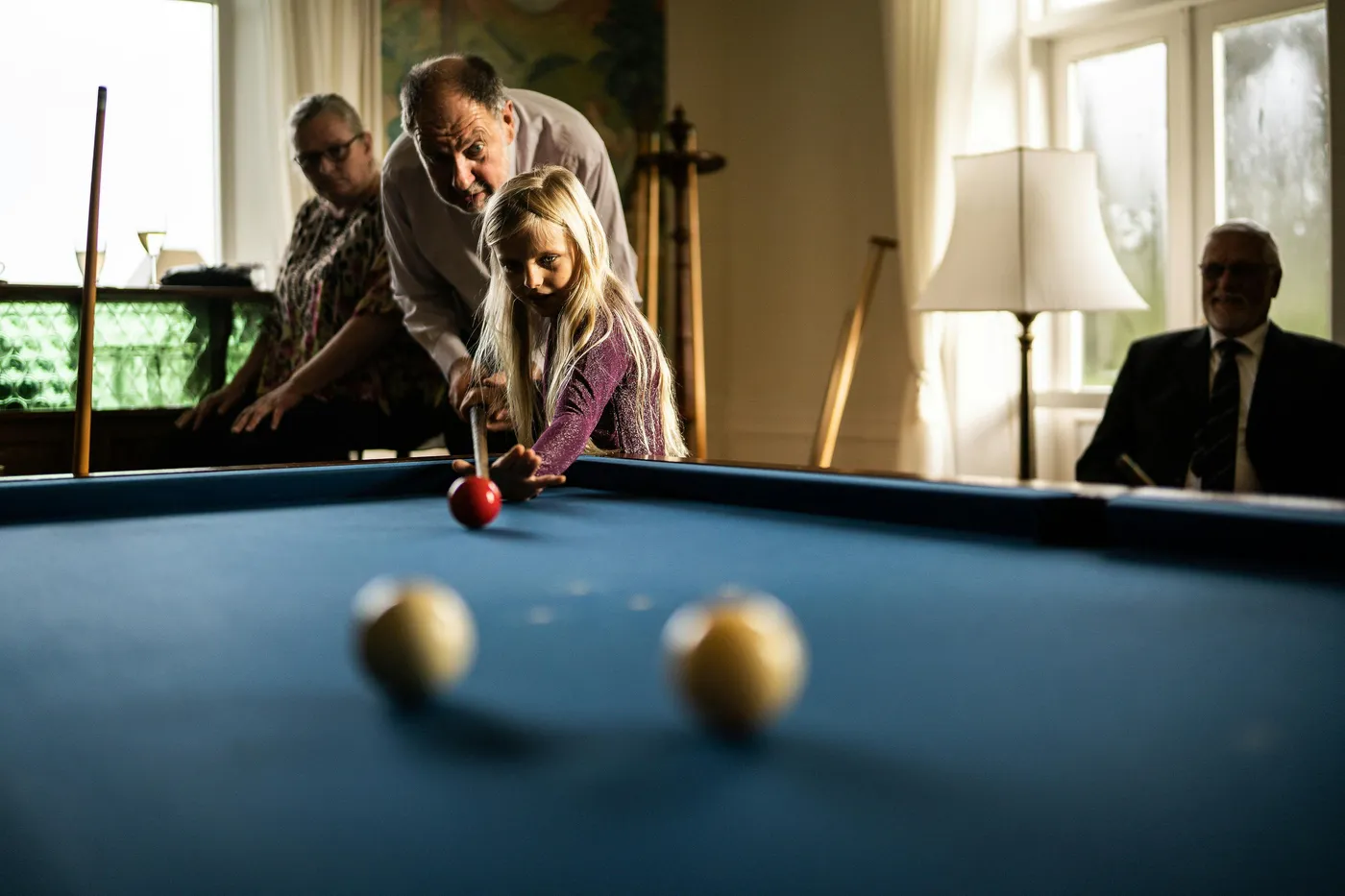
Many clubs offer junior sessions, discounted rates for young players, and structured coaching. Look for clubs with DBS-checked coaches and dedicated junior programmes.

Find a Coach
To help your child improve and reach their potential, consider lessons with an officially qualified WPBSA Snooker Coach. The WPBSA runs a coach qualification programme and maintains a coach finder to help you locate your nearest qualified coach. Coaching covers technique, tactical play, mental preparation, and competition readiness.
The Junior Competitive Pathway
English snooker has one of the most structured junior pathways in any sport, governed by the English Partnership for Snooker and Billiards (EPSB). The pathway takes players from their first £1 club qualifier all the way to international representation.
Under-14 Championship
£1 entryUnder 14 on 31 August
Club qualifiers → Regional stages → National Final. Over 170 entries in 2023/24.
Under-16 Championship
£20 entryUnder 16 on 31 August
Groups followed by knockout over one weekend. Former winners include Jack Lisowski.
Under-18 Championship
£25 entryUnder 18 on 31 August
Groups followed by knockout. Judd Trump won this in 2005 before turning professional.
Under-21 Championship
£30 entryUnder 21 on 31 August
The senior junior championship. Kyren Wilson won in 2012 before becoming world champion.
English Junior Tour
Beyond the championships, the English Junior Tour provides regular competitive snooker throughout the season. Five two-day weekend events at venues across England give juniors the chance to earn ranking points and compete against the best in their age group.
The top eight players from the previous season are seeded into the EPSB Junior Elite Performance Programme — a talent pathway featuring high-performance training camps, educational workshops, and support from the WPBSA. This programme is designed to prepare the best young players for professional careers.
Elite Talent Pathway
For the most talented players who aspire to join the World Snooker Tour, the pathway continues internationally:
- EPSB Junior Elite Performance Programme — Training camps, educational workshops, and international selection for England's top juniors
- WSF Junior Championship — Annual international event open to amateur juniors worldwide, with the winner receiving a two-year professional tour card
- International representation — Top EPSB juniors are selected to represent England at European and World events
Skills Developed
Geometry & Angles
Every shot involves calculating angles — players learn geometry instinctively through practice.
Focus & Concentration
Building a break requires sustained focus over 20-30 minutes — the same skills needed for exams.
Strategic Thinking
Often called "chess on a table" — players think several shots ahead and adapt to their opponent.
Mental Arithmetic
Constantly calculating scores, remaining points, and whether snookers are needed.
Sportsmanship
Players call their own fouls and respect opponents — a strong tradition of fair play.
Accessibility
Inclusive regardless of body type — can be played competitively from age 8 to 80.
Career Pathways
While becoming a professional player is the dream for many, cue sports offer other career paths too. Here are some routes with real salary data:
Professional Player
Competing on the World Snooker Tour or pool circuit
Key Skills
Typical Route
Junior rankings → Q-School → Tour card → Professional circuit
Coach
Teaching technique, tactics, and mental preparation
Key Skills
Typical Route
WPBSA coaching qualification → Private coaching → Academy work
Referee / Official
Officiating matches at amateur and professional level
Key Skills
Typical Route
Local officiating → Regional events → National → International panel
Club / Venue Manager
Running snooker clubs and leisure venues
Key Skills
Typical Route
Club staff → Duty manager → Club manager → Multi-venue management
Sports Journalist / Commentator
Covering snooker for TV, radio, print, and online media
Range: £23.2k - £41.6k
Source: ONS ASHE 2024
Key Skills
Typical Route
Fan content → Local media → National coverage → TV commentary
Salary data from Office for National Statistics, Annual Survey of Hours and Earnings (ASHE) 2024
Find Snooker & Pool Near You
Over 1,200 clubs mapped across the UK, plus junior championships and tour events.
Sources: WPBSA Junior Snooker, EPSB Junior Development. Content was rephrased for compliance with licensing restrictions.